

Space Exploration and Sustained Operations Beyond Earth
A technically grounded forum convening the space and terrestrial robotics communities around the challenges of exploration and sustained operations beyond Earth — from lunar and planetary surfaces to orbit.
Important Info for Attendees
About
Robotic systems are becoming central to the next decade of space activity: NASA's Artemis lunar campaign and broader Moon-to-Mars architecture; the growing roles of ESA, JAXA, and other agencies in lunar exploration infrastructure; and expanding commercial capabilities beyond Earth orbit all demand higher levels of autonomy, adaptability, and human-robot teaming. In parallel, terrestrial robotics is advancing rapidly through an explosion in AI capabilities, cheaper and better sensors and compute, and improved sim-to-real transfer — creating a timely opportunity to translate these advances into more capable and robust space robotic systems.
This workshop convenes the space robotics and terrestrial robotics communities around the challenges and opportunities that most directly impact exploration and sustained operations beyond Earth. It focuses on robotic systems that support lunar and planetary missions, astronaut assistance, surface infrastructure, logistics, and other mission-enabling capabilities in extreme environments.
Compared to prior space robotics events, this workshop is framed around the broader challenge of enabling exploration and sustained operations beyond Earth, rather than a single domain or technical area. It brings together multiple domains under one umbrella, with an applied emphasis on mission use, integration constraints, and validation.
Timeline
Extended: August 21st, 2026, 11:59 PM (AoE)
Agenda
All times are in Eastern Time (ET).
- Opening Remarks8:30 – 8:35 AM
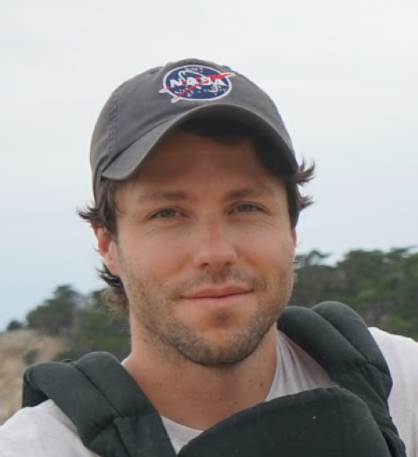 Ignacio G. López-FrancosSETI Institute / UT Austin
 - KeynoteSimilitude Techniques for Correlating Lunar Rover Performance with Earth Testing8:35 – 9:00 AM
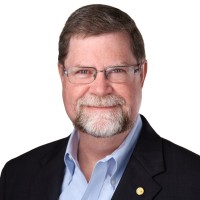 Rob AmbroseTexas A&M University
Speaker bio
About Rob AmbroseRob Ambrose is a University Distinguished Professor of Mechanical Engineering at Texas A&M University, Associate Director of the Texas A&M Space Institute, and Director for Space and Robotics Initiatives at the Texas A&M Engineering Experiment Station. Before joining Texas A&M, he spent more than two decades at NASA Johnson Space Center, where he served as Chief of the Software, Robotics and Simulation Division and helped lead the development of systems including Robonaut, Valkyrie, and multiple lunar rover concepts. He is a member of the National Academy of Engineering, and his research focuses on robotic manipulation, mobility, and space robotics.
- Invited TalkFrom Constellation Coordination to Mission-Scale Digital Twins9:00 – 9:25 AM
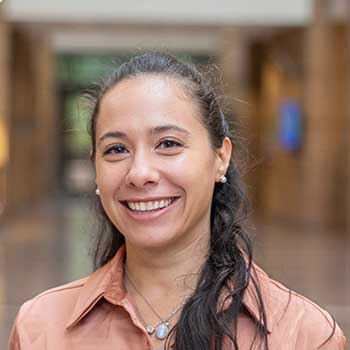 Giusy FalconeUniversity of Michigan
Abstract & speaker bio
AbstractCoordinated space missions require spacecraft to make decisions with incomplete information while their opportunities to observe and interact change along their orbits. This talk presents research from the Space-FALCON Lab on distributed state estimation and constellation control, and examines how these capabilities can support autonomy across an entire mission. The talk will introduce SpaceAGORA.jl, a modular simulation framework for developing and evaluating spacecraft guidance, navigation, and control, and discuss how it connects individual algorithms to realistic mission scenarios. Examples from spacecraft coordination and proximity operations will motivate the development of mission-scale digital twins that link physical models with observations and experiments to assess the consequences of autonomous decisions. It will also discuss the role of flight data and hardware experiments in building confidence in these models, and the challenges of keeping human operators informed and involved as mission complexity grows.
About Giusy FalconeGiusy Falcone is an Assistant Professor of Aerospace Engineering at the University of Michigan, where she founded and directs the Space-FALCON Lab. Her research connects flight mechanics, guidance and control, and autonomous decision-making to enable adaptive space missions. She studies spacecraft and constellation coordination under uncertainty and develops simulation tools for evaluating mission behavior, including SpaceAGORA.jl. She earned her Ph.D. in Aerospace Engineering at the University of Illinois Urbana-Champaign in 2022 and was a postdoctoral researcher at Carnegie Mellon University’s Robotics Institute before joining Michigan.
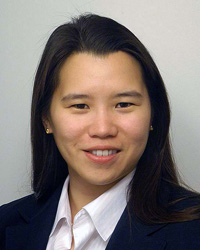
- Invited TalkTRUSSES: Temporarily, Robots Unite to Surmount Sandy Entrapments, then Separate9:25 – 9:50 AM
 Cynthia SungUniversity of Pennsylvania
Abstract & speaker bio
AbstractRobots exploring extraterrestrial environments will need to be able to robustly traverse the environment and recover from a number of hazards, including sinkage, slippage, and entrapment in the ground. As part of a recent LuSTR project, we have developed methods for teams of robots to jointly overcome hazards by attaching to each other to form larger and more stable, maneuverable structures. In this talk, I will show some results of this project and discuss our approach to giving robots the ability to sense ground interactions, estimate traversal risk, and plan safe motions, even in the presence of loose, treacherous terrain.
About Cynthia SungCynthia Sung is an Associate Professor in the Department of Mechanical Engineering and Applied Mechanics (MEAM) and a member of the General Robotics, Automation, Sensing & Perception (GRASP) Lab at the University of Pennsylvania. She completed a Ph.D. (2016) in Electrical Engineering and Computer Science at MIT and a B.S. (2011) in Mechanical Engineering at Rice University. Her research interest is computational design and fabrication for robotic systems, with a particular focus on origami-inspired and compliant robots. She is the recipient of a 2023 ONR Young Investigator Award, a 2019 NSF CAREER Award, a 2020 Johnson & Johnson Women in STEM2D Scholars Award, and a 2017 Popular Mechanics Breakthrough Award.
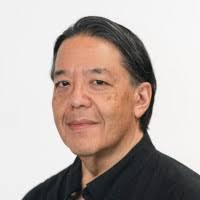
- Industry Lightning TalkShadow Voyager: A Semi-Autonomous Rover for Lunar Ice Mining9:50 – 9:55 AM
 Brian YamauchiStarpath
Abstract & speaker bio
AbstractStarpath was founded by former SpaceX engineers to use robots and ISRU to enable human settlement of the Moon and Mars. Starpath is developing the Shadow Voyager rover to mine water ice from permanently shadowed regions (PSRs) of craters at the Lunar South Pole, as well as the chemical plant to refine the ice into LOX for propellant and the vertical solar array to power the plant. Shadow Voyager uses LIDAR sensors, an IMU, a star tracker, and fine sun sensors for semi-autonomous waypoint navigation within line-of-sight and fully autonomous navigation beyond line-of-sight.
We’re currently developing the Shadow Voyager R9 prototype at our ATLANTIS (Autonomous Technology Lunar Analog Navigation Test and Integration Site) in the Mojave Desert, while building the near-flight-ready R11 prototype, with the goal of having a flight-ready rover by Q4 2027. We’re also working with NASA’s Ames Research Center and Goddard Space Flight Center on the HELION (High-speed Exploration using LIDAR for Intelligent Onboard Navigation) project to develop high-speed navigation capabilities for autonomous lunar rovers.
About Brian YamauchiBrian Yamauchi is the Head of Software Engineering at Starpath, a New Space company building an end-to-end system for mining ice on the Moon and producing LOX to refuel landers. He leads the team developing the autonomy, teleoperation, and communications software for the Shadow Voyager rover. Previously, he was a Principal Roboticist at both Boston Dynamics and iRobot, and he has over 30 years of experience developing robots for commercial, defense, and space applications. Before that, he was a Robotics Engineer at NASA’s Kennedy Space Center and a Research Associate at the US Naval Research Laboratory. He holds a B.S. in Applied Math/Computer Science from Carnegie Mellon University, an M.S. in Computer Science from the University of Rochester, and a Ph.D. in Computer Science from Case Western Reserve University.
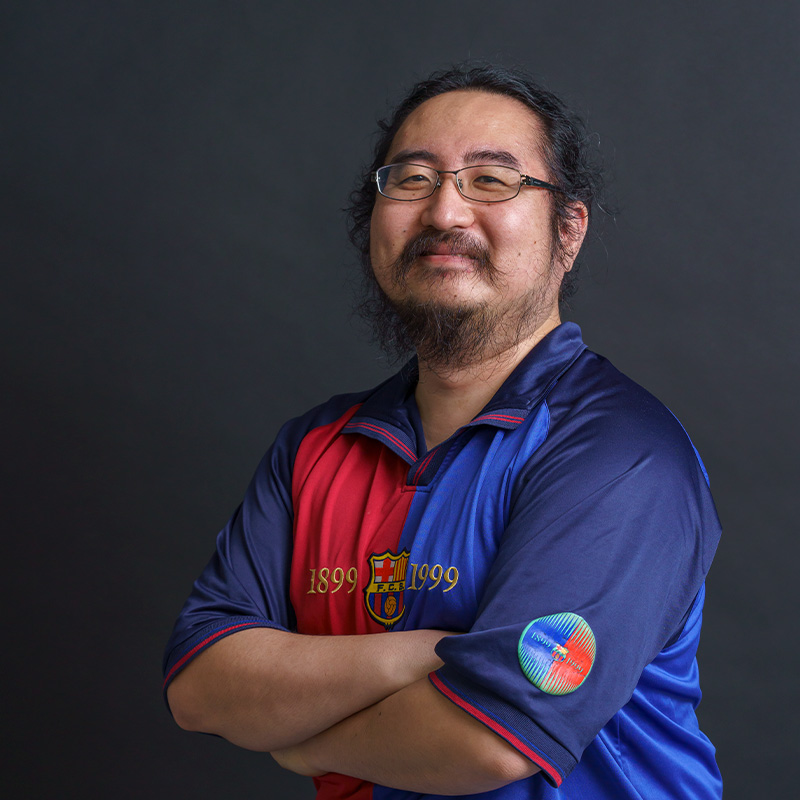
- Invited TalkGITAI’s Approach to Spacecraft Development: Agile, Vertically Integrated Development Built on Experience in Terrestrial Robotics9:55 – 10:10 AM
 Yuto NakanishiGITAI
Abstract & speaker bio
AbstractGITAI is a vertically integrated space company delivering scalable LEO satellite constellation platforms for interceptor, on-orbit servicing, communications, and observation missions. A key strength of GITAI is its in-house development of core technologies, enabling tight integration and rapid iteration across spacecraft systems.
Coming from terrestrial robotics rather than the traditional space industry, GITAI brings a different development mindset, unconstrained by some conventional assumptions and practices. Building on this experience, we apply an agile, highly iterative approach based on rapid cycles of design, build, test, and failure — what we call “crush & build.”
In this talk, I will introduce GITAI’s approach to accelerating spacecraft development, accompanied by videos from our latest development and testing efforts.
About Yuto NakanishiYuto Nakanishi is Chief Robotics Officer of GITAI. For nearly eight years at GITAI, he has worked to bring development practices and engineering know-how cultivated in terrestrial robotics into spacecraft development, helping establish GITAI’s agile and vertically integrated development approach. He was previously Founder & CEO of SCHAFT. After serving as a research associate at the University of Tokyo Graduate School of Information Science and Technology (JSK Lab), he founded the bipedal robotics startup SCHAFT, which won the DARPA Robotics Challenge Trials in 2013. He later sold the company to Google and led the Tokyo bipedal robotics platform development team at Google X for five years.
- Contributed Paper Spotlights10:10 – 10:30 AM
- Dynamic Symmetry for Orientation-Independent Planetary MobilityBoxi Xia, Jiaxun Liu, Boyuan Chen
- In-Situ Reconstruction of the International Space Station Using 3D Gaussian Splatting and AstrobeeHudson Kim, Ryan Soussan, Brian Coltin, Jordan Kam
- Bridging the Scale Gap: Cross-View Localization from Dense Rover LiDAR to Coarse Lunar DEMsSeongwon Kim, Minseok Song, Seonmo Yang, Soumyadeep Chatterjee, Ryan Soussan, Seokju Lee, Pyojin Kim
- Rethinking Learned Occupancy in Autonomous Active Mapping with Observation-Gated FilteringJiahui Zhang, Bonian Han, Gongbo Liang, Yu Zhang
- Coffee Break + Poster Session10:30 – 11:00 AM
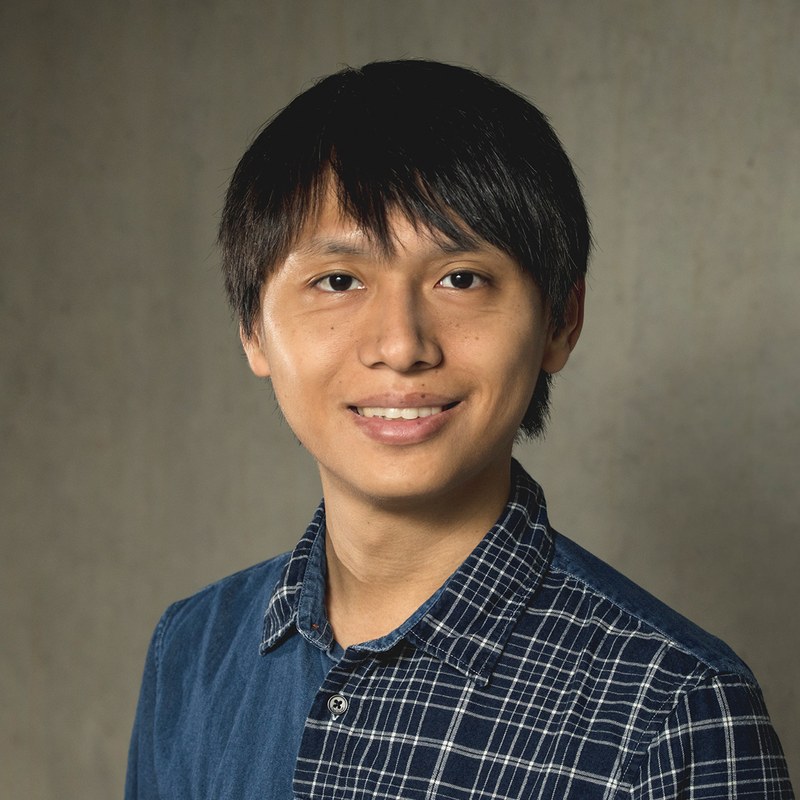
- Invited TalkLunar Leaper: Agile Legged Locomotion on the Moon11:00 – 11:25 AM
 Yusuke TanakaETH Zurich
Abstract & speaker bio
AbstractLegged robots have demonstrated unique traversability and robust locomotion capabilities in terrestrial environments. Extending these capabilities to extraterrestrial applications, such as lunar exploration, however, introduces substantial challenges in both mechanical design and control under tightly constrained mass, power, mechanical, and onboard-computing resources. Unlike terrestrial systems, space robotic hardware must accommodate stringent thermal-management and environmental-protection requirements associated with vacuum, extreme temperature variations, abrasive dust, radiation, and launch-induced shock and vibration. At the same time, locomotion on lunar regolith introduces highly variable and uncertain terrain interactions, placing additional demands on robust control.
About Yusuke TanakaYusuke Tanaka is a postdoctoral researcher at ETH Zurich’s Robotic Systems Lab (RSL) under Prof. Marco Hutter, where he works on legged robotic systems for terrestrial and extraterrestrial applications. He received his Ph.D. in Robotics from UCLA, where he worked at the Robotics and Mechanisms Laboratory on multi-limbed and climbing robots.
His research focuses on mechanical-intelligence-aware robotic systems for extreme environments, including limbed climbing robots, multimodal robotic systems, and dynamic legged robots for lunar exploration. At ETH Zurich, he serves as a robotics lead for the LunarLeaper project, developing dynamic legged mobility technologies for future lunar missions.
- Invited TalkAI Robotics for Sustainable Space Exploration11:25 – 11:50 AM
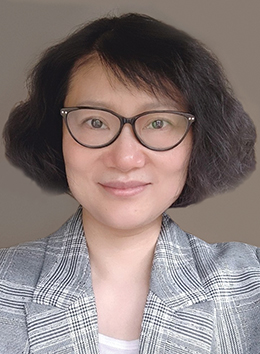 Yang GaoHong Kong University of Science and Technology
Abstract & speaker bio
AbstractThe global space sector is moving toward the New Space era, driven by commercialization and resource exploitation, where AI robotics will play central roles and be directly responsible for meeting stringent requirements in cost, operability, reusability, and sustainability of long-lived assets in harsh space environments. This talk will present recent research and technology development involving AI-powered algorithmic and mechanism design, ranging from spacecraft GNC to astronaut assistive robotics.
About Yang GaoProfessor Yang Gao, FIET FRAeS, has over 20 years of R&D and space mission experience, including ESA’s ExoMars, Proba-3, and lunar VMMO; the UK’s CLEAR, MoonLITE, and Moonraker; and China’s Chang’E-3/-8. She has led research projects for ESA, UKSA, UKRI, the EU, and industrial companies. Research under her leadership has won the IAF 3AF Edmond Brun Silver Medal (2013), the COSPAR Outstanding Paper Award (2016), the ESA SysNova Challenge First Prize (2018), the IEEE-ICRA Space Workshop Wiley Poster Award First Prize (2020), and the Sino-UK Entrepreneurship Competition First Prize (2022), among others. She served as Co-Chair of the IEEE-RAS Space Robotics Technical Committee for 2022–2025 and is an IEEE-RAS Distinguished Lecturer for 2026–2028.
Professor Gao spent over 20 years (2004–2025) in the UK as Professor of Robotics and Director of the Robotics Centre at King’s College London. Earlier, as Professor of Space Autonomous Systems at the University of Surrey, she founded and led the award-winning Space Technology and Autonomous Robotic systems Laboratory (STAR-LAB).
She joined HKUST in mid-2025 as a Global STEM Professor. At HKUST, she founded the Centre for AI and Robotics in Space Sustainability (CAIRSS), dedicated to developing technologies for orbital debris removal, autonomous space systems, and in-situ extraterrestrial resource utilization for crewed and uncrewed deep space missions. She is also Co-Director of HKUST’s Space Science & Technology Institute and Director of the InnoHK Hong Kong Space Robotics & Energy Centre.
- Panel DiscussionNext-Gen Lunar Robotics: Building and Sustaining a Moon Base11:50 AM – 12:20 PMYuto NakanishiGITAI
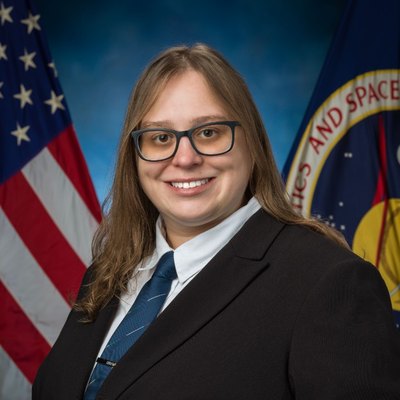 Emma ZemlerNASA Johnson Space CenterBrian YamauchiStarpath
 Yashwanth NakkaGeorgia Tech
Panel description & panelists
About the panelBuilding and sustaining a human presence on the Moon will require a new generation of robots that can move beyond one-off demonstrations to survive and perform useful work as part of day-to-day surface operations. These systems will need to operate reliably over time, adapt to the lunar environment, and work effectively with crews and mission operators. This panel will examine what it takes to turn promising prototypes into operational systems, and how researchers, companies, and mission organizations can work together to make next-generation lunar robotics a practical foundation for a Moon base.
Yuto Nakanishi · GITAIChief Robotics Officer of GITAI. His experience spans humanoid and legged robotics, on-orbit robotic systems, and commercial space robotics, bringing a deployment-focused perspective on building machines that can perform useful work beyond Earth.
Emma Zemler · NASA Johnson Space CenterProject Manager of Dexterous Robotics at NASA Johnson Space Center. She brings the mission-integration perspective: how operational needs, environments, requirements, and challenge problems can be translated into productive collaboration with the broader robotics community, and what promising technologies must demonstrate to become relevant to future lunar operations.
Brian Yamauchi · StarpathHead of Software Engineering at Starpath, developing lunar surface systems with an emphasis on real hardware, field testing, and infrastructure-oriented use cases. He brings a commercial operator’s perspective on iteration speed, reliability, economics, and the path from prototype to sustained utility on the Moon.
Yashwanth Nakka · Georgia TechAssistant Professor of Aerospace Engineering and Director of the Aerospace Robotics Laboratory at Georgia Tech. His research focuses on autonomous aerospace systems, multi-robot collaboration, and planning and control under uncertainty. Previously a Robotics Technologist at NASA JPL, where he led planning, controls, and estimation tasks on CADRE, EELS, and DARPA LINC, he brings an academic perspective grounded in hardware validation and trustworthy robotic systems for lunar operations.
- Awards + Closing Remarks12:20 – 12:30 PMBest Paper, Runner-Up Paper, Best Oral Presentation, and Best Poster.
- Lunch12:30 PMDetails TBD.
Speakers
Accepted Papers
Congratulations to all the authors whose work was selected! Thank you to everyone who submitted, and to our reviewers for their valuable feedback and dedication to maintaining the quality of the workshop.
Social & Tour
Sunday, Sept. 27 · 8:30 – 11:00 PM ET · Space Bar, 22 Market Square
Join the SRW × ROSE workshop social right after the IROS welcome reception. RSVP is required, and approval is subject to capacity.
Monday, Sept. 28 · 10:30 AM ET · About 90 minutes
Facility tour of Astrobotic’s headquarters in Pittsburgh. Confirmed attendees have received logistics by email.
Sign-up closedOrganizers
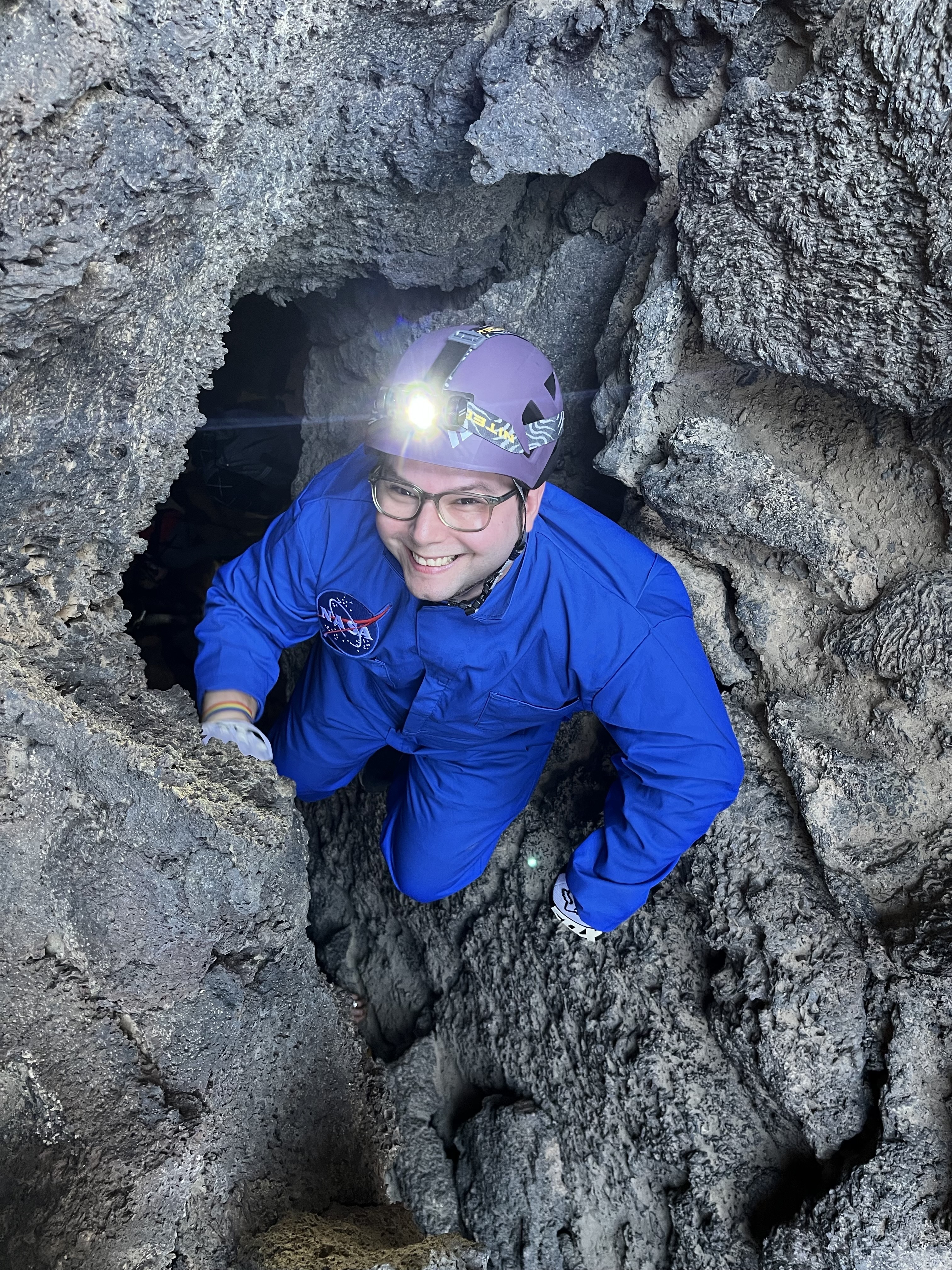
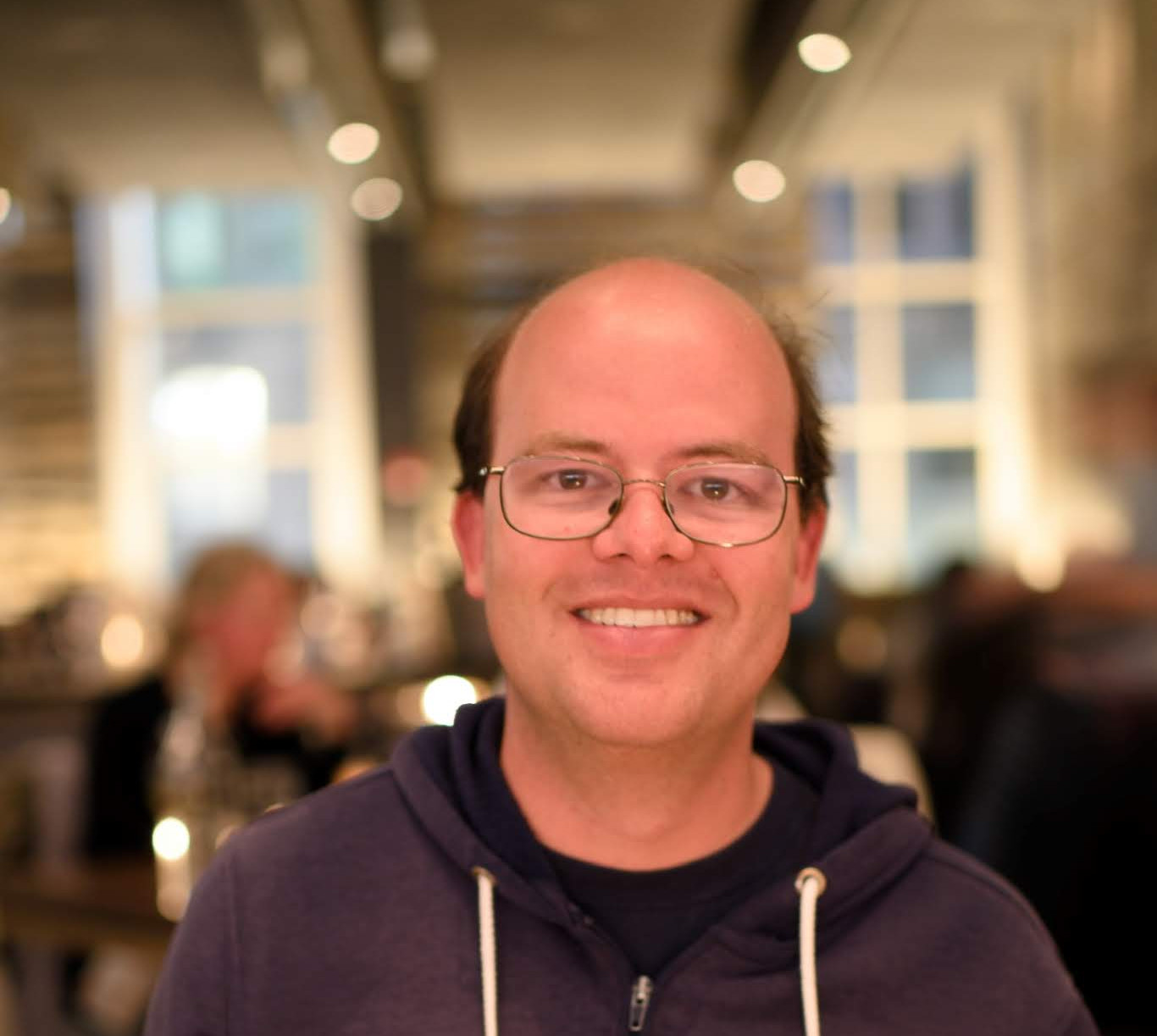
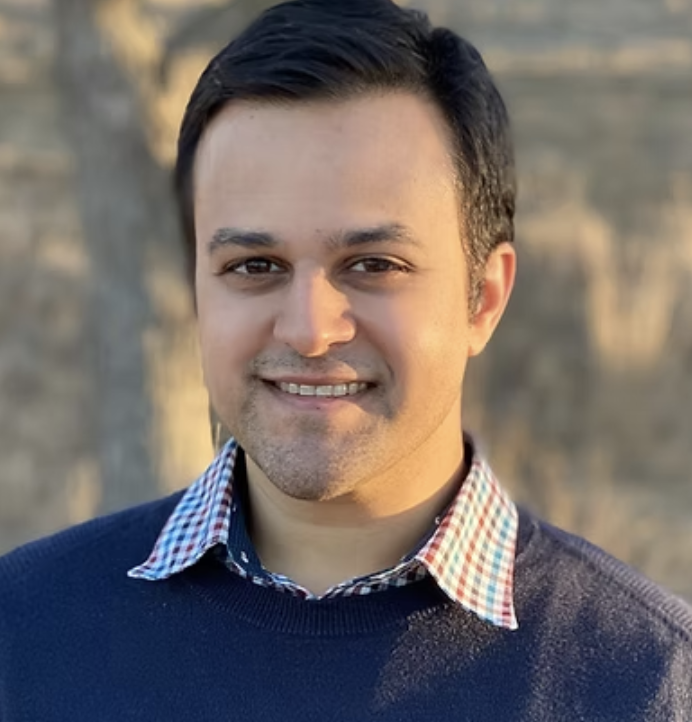
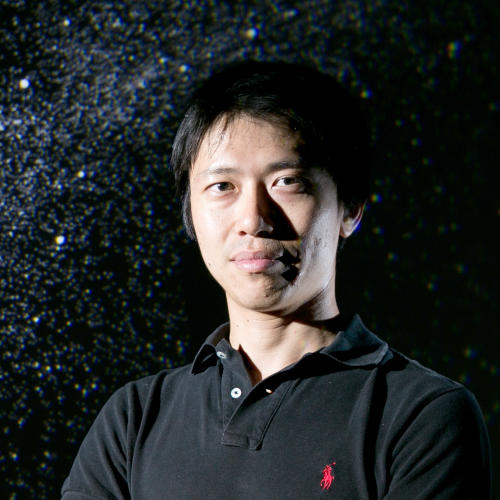
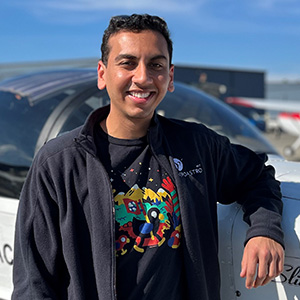
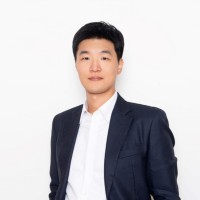
The Space Robotics Workshop is a volunteer-led effort by researchers and practitioners in robotics, autonomy, and AI from across academia, government, and industry.


Sponsors
We are grateful to the organizations whose support helps make the Space Robotics Workshop possible.



Expected Audience
The workshop targets researchers and practitioners working on planetary robotics and autonomy for extreme surface environments (Moon, Mars, and other planetary bodies), along with the broader IROS community developing enabling methods that translate to deep-space missions. Expected backgrounds include surface mobility and terramechanics, contact-rich manipulation and sampling, perception / localization / mapping under degraded sensing, planning and control for long-horizon autonomy, multi-robot and heterogeneous teaming, fault management and assurance, and human-robot teaming.
We explicitly engage the IEEE RAS Technical Committee on Space Robotics and closely related communities (Field Robotics, Robotic Vision, SLAM, Mobile Manipulation, Multi-Robot Systems, and HRI), as well as government agencies and the Pittsburgh-area robotics and space ecosystem (e.g., Astrobotic, Field.AI, and Carnegie Mellon University).
Call for Contributions
Submissions are closed. The call is kept here for reference; see Accepted Papers for the program.
The organizing committee invites high-quality contributions advancing robotics for exploration, operation, construction, and sustained activity beyond Earth. We invite extended abstracts (2–4 pages) on topics including but not limited to:
- Planetary surface mobility, manipulation, and loco-manipulation across wheeled, legged, aerial, and hybrid platforms
- Lunar surface logistics, construction, assembly, servicing, maintenance, and in-situ resource utilization (ISRU)
- In-space servicing, assembly, and manufacturing; orbital robotics; and IVA/EVA robotic assistance
- Multi-robot coordination and heterogeneous teams for distributed operations
- Machine perception, spatial intelligence, navigation, and mapping under degraded sensing and limited PNT
- Human-robot teaming, shared autonomy, and teleoperation under communication latency
- Robust autonomy, fault management, anomaly response, and assurance for learning-enabled systems
- Earth-independent autonomy under constrained compute, power, communications, and thermal resources
- Physical AI, embodied foundation models, and adaptive control for contact-rich tasks
- Sim-to-real transfer, digital twins, benchmarking, analog testing, and interoperable robotic interfaces
Submissions will be evaluated based on technical merit and innovation, relevance to space robotics and sustained operations beyond Earth, clarity of presentation, and potential impact on the field. All submissions will undergo double-blind peer review. Please anonymize your manuscript by removing author names and affiliations and avoiding identifying self-references.
The workshop is non-archival: accepted submissions will not appear in IEEE proceedings, and authors retain full rights to submit their work elsewhere. Work in progress and concurrently submitted work are welcome.
- Extended abstracts may be up to 4 pages, including references.
- Submissions must be in PDF format (up to 10 MB) and must follow the official IEEE RAS double-column template. You can find the templates on the official IEEE RAS template page or via the IROS 2026 call for papers guidelines.
- All submissions must be made through OpenReview. Here's the submission link.
- Authors of accepted submissions may optionally provide a 2–3 minute video presentation. Instructions will be provided after notification.
- Accepted submissions will be presented as posters. A selected subset will also be invited to give short oral presentations. Awards presented at the workshop are Best Paper, Runner-Up Paper, Best Oral Presentation, and Best Poster.
- Posters should fit within a maximum 4 ft × 4 ft (122 × 122 cm) display area. No mandatory template or orientation. An A0 poster fits within this area.
- Camera-ready versions of accepted submissions will be published on the workshop website. At least one author must register for the workshop and present the poster in person.
For submission-related questions, please contact the Program Chairs:
- Andres Mora: andres.moravargas@nasa.gov
- Pyojin Kim: pjinkim@gist.ac.kr
Contact
For sponsorship, participation, or other inquiries please contact hello@space-robots.org with the subject line SRW @ IROS 2026.