
Humanoids at the Edge: From Hazardous Operations to Space Exploration
A full-day forum on what it takes for humanoids to do useful work where people shouldn’t have to, from hazardous jobs on Earth to exploration beyond it.
Important Info for Attendees
About
Humanoid robotics is approaching a transition from compelling demonstrations to sustained, reliable operation. A central question is whether humanoids can perform useful work in environments that are dangerous, costly, or impossible for humans to operate in. Extreme environments expose limits in mobility, manipulation, perception, autonomy, and resilience, and they raise the cost of failure.
The humanoid form factor matters because much of the world is built around the human body. Humanoids can potentially use existing tools, interfaces, vehicles, and workspaces, and they can serve as embodied telepresence platforms so operators can perceive and act from a distance. That combination could extend human reach without redesigning every environment around the robot.
This workshop brings together researchers in humanoid robotics, whole-body control, robot learning, teleoperation, field robotics, and space robotics to examine what credible deployment requires: which capabilities matter most, how systems adapt to uncertain terrain and poorly modeled conditions, and how to produce evidence of reliability, safety, and mission readiness when failures are costly and representative data are scarce.
Space exploration is a central application and forcing function. Hazardous terrestrial domains offer nearer-term places to test related capabilities. The aim is to name shared technical bottlenecks and to define tasks, test environments, benchmarks, and evaluation criteria that measure progress beyond isolated demonstrations.
- Mobility and whole-body manipulation in unstructured environments
- Tool use, maintenance, construction, and hazardous operations
- Learning, adaptation, and sim-to-real transfer
- Teleoperation, shared autonomy, and human-robot teaming
- Robustness, verification, validation, and runtime assurance
- Environmental adaptation, benchmarks, and field evaluation
- Field science and exploration, including lunar and planetary surface operations
Timeline
Monday, December 7, 2026
9:00 AM – 5:00 PM PT
Room TBD
Agenda
Provisional schedule. The workshop runs 9:00 AM – 5:00 PM Pacific Time. Session order, titles, and speakers are still being set and will change.
All times below are Pacific Time (PT) and are not final.
- OpeningOpening remarks9:00 – 9:05 AMSpeaker TBD.
- KeynoteKeynote — TBD9:05 – 9:35 AMIndustry and hazardous operations. Title and speaker to be announced.
- Invited talkInvited talk — TBD9:35 – 10:05 AMTitle and speaker to be announced.
- Invited talkInvited talk — TBD10:05 – 10:30 AMTitle and speaker to be announced. This slot may become a short panel.
- Break10:30 – 11:00 AM
- SpaceInvited talk — TBD11:00 – 11:30 AMSpace exploration. Title and speaker to be announced.
- PanelPanel — TBD11:30 AM – 12:30 PMSpace robotics panel. Topic, moderator, and panelists to be announced.
- Lunch12:30 – 1:30 PMDetails TBD.
- ContributedSelected oral presentations1:30 – 2:30 PMShort talks chosen from submitted extended abstracts. Lineup TBD.
- Invited talkInvited talk — TBD2:30 – 3:00 PMTitle and speaker to be announced.
- Break3:00 – 3:30 PMPoster session details TBD.
- FieldInvited talk — TBD3:30 – 4:00 PMExtreme field operations. Title and speaker to be announced.
- FieldInvited talk — TBD4:00 – 4:30 PMTitle and speaker to be announced.
- DiscussionClosing discussion4:30 – 5:00 PMStructured discussion on priority tasks, benchmarks, and evaluation criteria. Format TBD.
Speakers
Invited speakers will be announced here. The lineup is still being confirmed.
Call for Contributions
The call is not open yet. Submission link, template, page limit, and dates will be posted here.
The organizing committee will invite extended abstracts on humanoids for hazardous operations, extreme field environments, and space exploration. The planned format is non-archival: accepted work is not expected to appear in IEEE proceedings, and authors keep the right to submit elsewhere. Final rules will be confirmed when the call opens.
Topics of interest include:
- Mobility and whole-body manipulation in unstructured environments
- Tool use, maintenance, construction, and hazardous operations
- Learning, adaptation, and sim-to-real transfer
- Teleoperation, shared autonomy, and human-robot teaming
- Robustness, verification, validation, and runtime assurance
- Environmental adaptation, benchmarks, and field evaluation
- Field science and exploration, including lunar and planetary surface operations
- OpenReview submission link.
- Abstract length, template, and eligibility.
- Submission, review, and notification dates.
- How accepted work will be presented (oral, poster, or both).
- Whether awards will be given.
Organizers
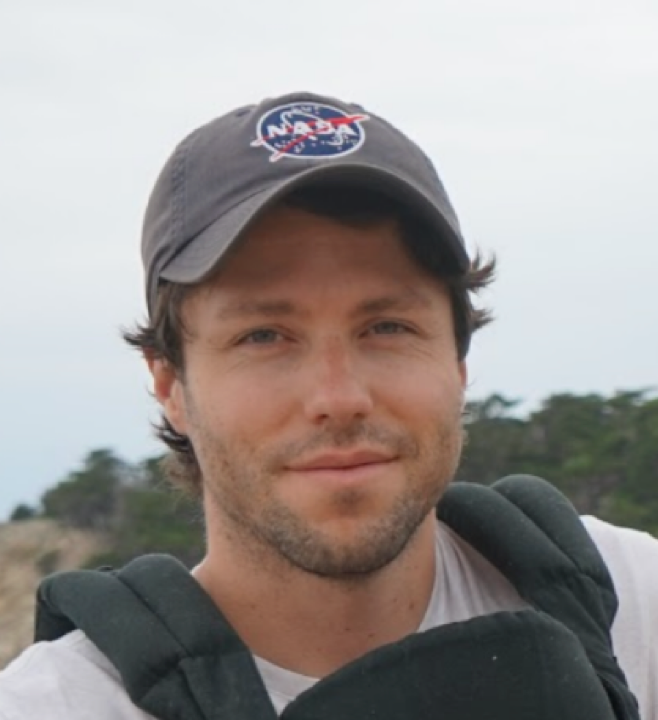
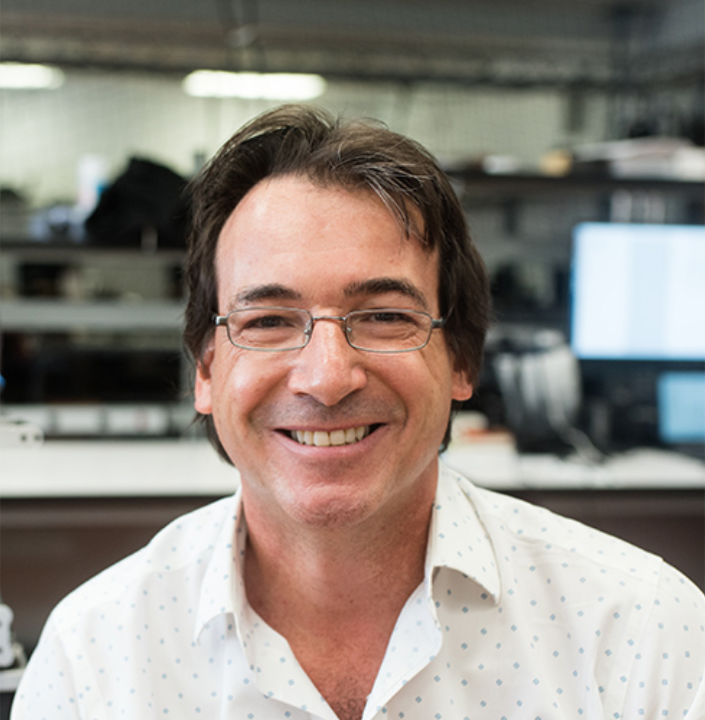
Humanoids at the Edge is organized by researchers and practitioners in humanoid robotics, field robotics, and space exploration.





Expected Audience
The workshop is for researchers and practitioners working on humanoid mobility and manipulation, robot learning, teleoperation and shared autonomy, field robotics, and space robotics, together with the broader Humanoids community. Relevant backgrounds include whole-body control, contact-rich tool use, operation in unstructured or hazardous settings, and evaluation of systems that have to be trusted when failure is costly.
We expect participation from academia, industry, and government, including groups already working on lunar and planetary surface robotics and on nearer-term hazardous operations on Earth.
Contact
For submissions, sponsorship, or other questions, contact hello@space-robots.org with the subject line Humanoids at the Edge @ Humanoids 2026.