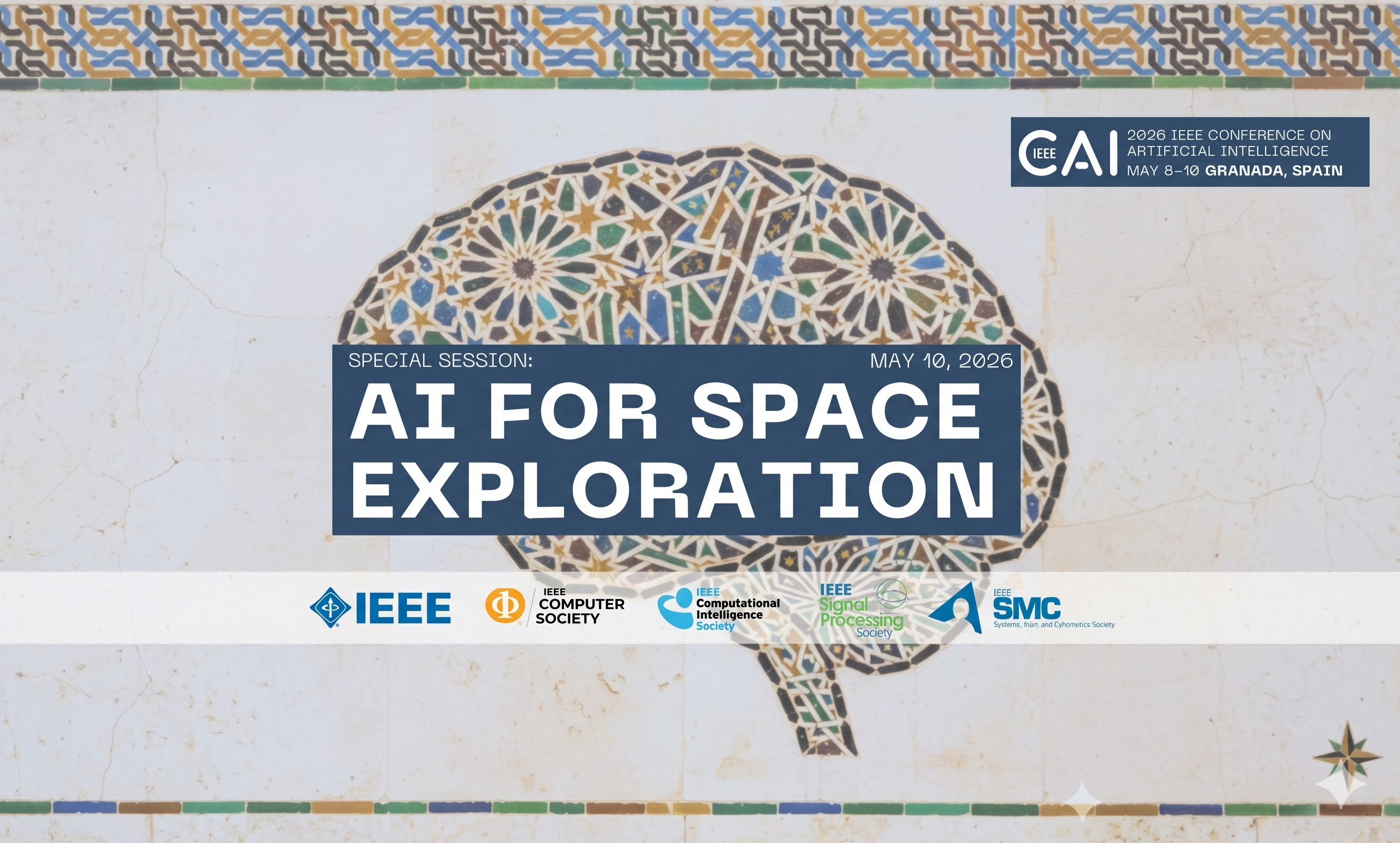
Overview
How advances in AI are reshaping autonomy, science, and operations for the next era of space exploration.
Artificial Intelligence has long played a role in space exploration. NASA has developed and flown AI technologies for over four decades — from early demonstrations in automated planning and scheduling, to Earth observation systems capable of mapping and responding to geographical events from orbit, to autonomous landers and rovers conducting science on Mars. Today, space exploration stands at a critical inflection point where advances in AI, particularly the recent generative AI wave, have the potential to dramatically expand scientific discovery and mission operational capability.
Several converging drivers underscore the timeliness of this topic. The cost of launch continues to decline, enabling a surge of high-capitalized commercial entrants and accelerating national programs such as NASA's Artemis campaign. NASA JPL's upcoming CADRE (Cooperative Autonomous Distributed Robotic Exploration) mission will deploy a swarm of rovers on the lunar surface, demonstrating how multi-agent autonomy is becoming central to future missions. At the same time, intensifying geopolitical competition has catalyzed a renewed space race in a far more complex technological ecosystem. These developments demand unprecedented levels of autonomy, adaptability, and decision support — areas where AI has become indispensable.
This Special Session addresses the technical challenges and opportunities of deploying advanced AI in space systems. Key issues include:
- Scalability of science and mission operations. Leveraging AI to analyze massive volumes of multisensor data collected from spacecraft, orbiters, and planetary missions.
- Autonomous exploration. Developing AI-driven agents capable of single-shot or minimally supervised missions to remote worlds where real-time ground control is infeasible.
- Validation, verification, and certification. Ensuring trust, safety, and robustness of AI algorithms when human lives and mission-critical objectives are at stake.
- Generalization to novel environments. Designing algorithms that adapt to out-of-distribution conditions characteristic of extraterrestrial terrains and atmospheres.
- Human–AI teaming. Enabling effective collaboration between astronauts, mission controllers, and AI systems in dynamic and uncertain operational contexts.
By bringing together experts in AI, robotics, aerospace engineering, and planetary science, this Special Session provides a focused forum to assess progress, highlight open challenges, and shape the research agenda for the coming decade — underscoring how breakthroughs in AI can unlock new frontiers of human and robotic exploration beyond Earth.
Key Info
Organizers



Schedule
Special Session held on May 10, 2026.
Speakers





Selected Papers
Gallery
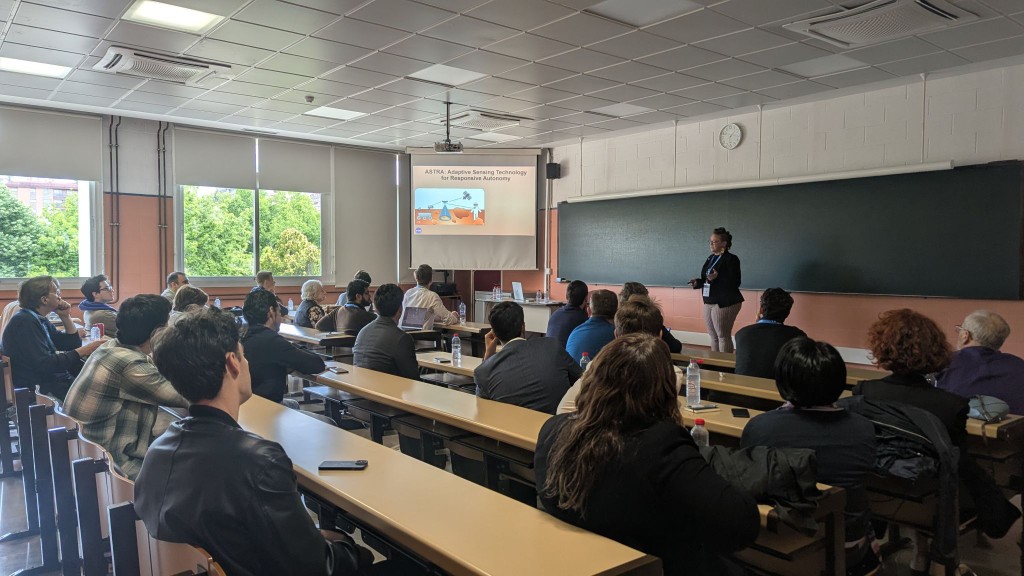

A Note from the Organizers
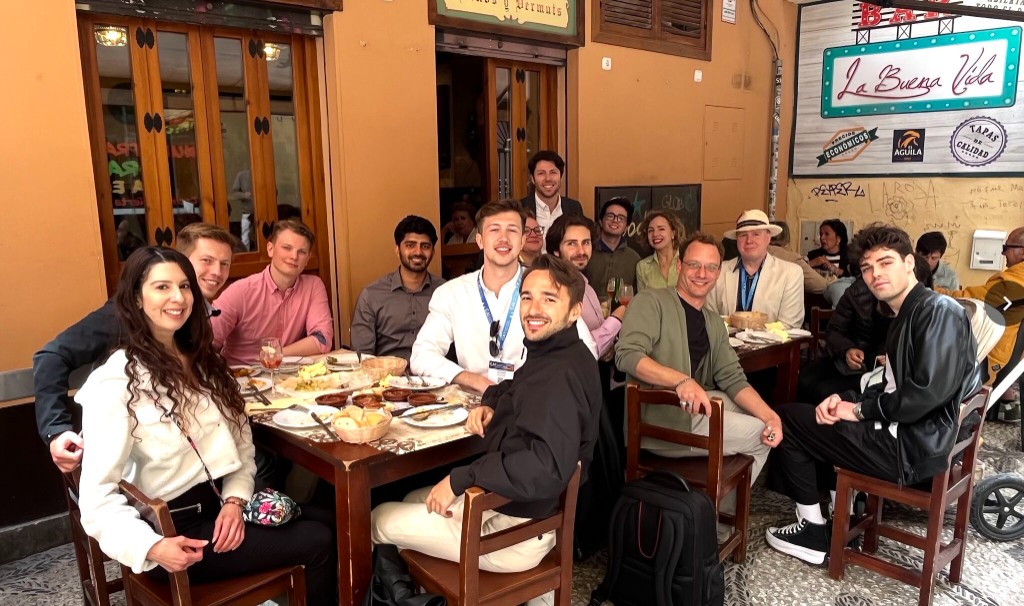
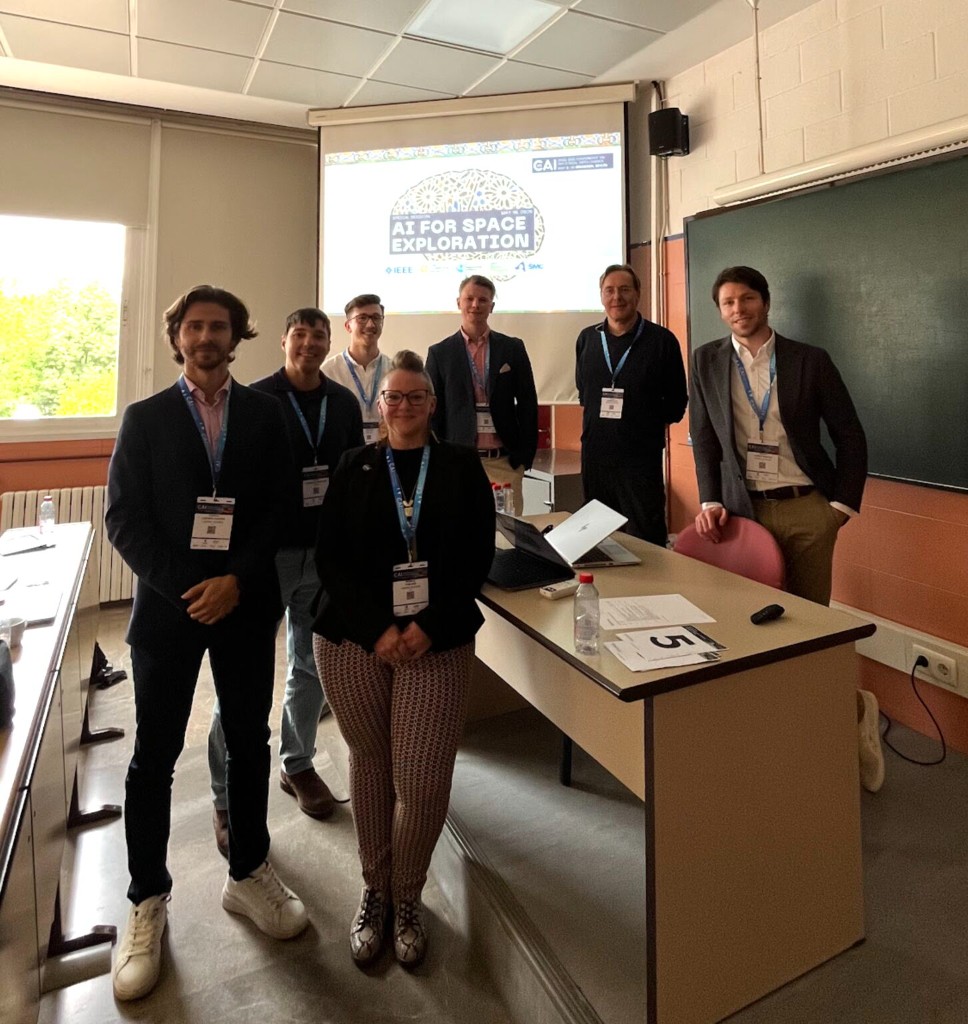
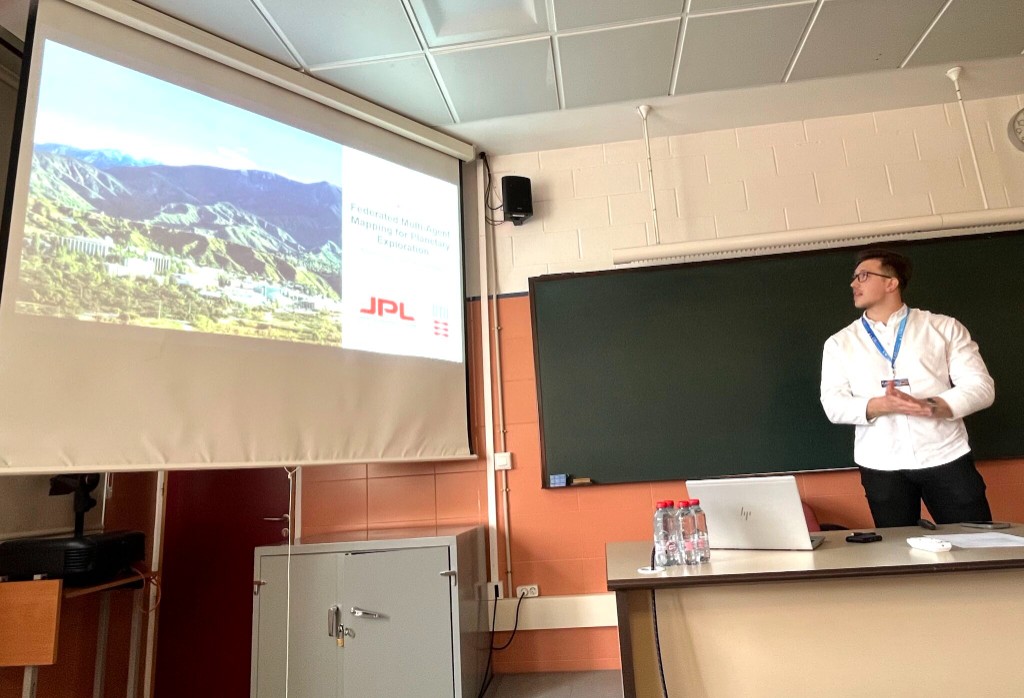
We had a fantastic session bringing together researchers from both sides of the Atlantic to explore the intersection of AI and space exploration.
One theme came through clearly: AI is becoming a mission-enabling capability for this new era of exploration.
Space is one of the hardest proving grounds for this technology. Systems need to operate with limited compute, constrained communications, uncertainty, radiation, and very little margin for failure. At the same time, AI has the potential to expand how we explore and understand the universe through more adaptive, capable, and trustworthy autonomous systems.
But bringing recent AI advances into flight is still hard. It requires resource-efficient computing, reliability, verification and validation, and faster testing and iteration cycles.
That is why forums like this matter. They give the AI and space communities a place to compare ideas, surface hard technical gaps, and build the collaborations needed to move promising research closer to real mission impact.
— The organizing team